
How to Search Civil Dockets
Civil cases in Wright County District Court are heard by Minnesota's general-jurisdiction trial court. To search, use Minnesota Court Records Online (MCRO). It accepts a full case number, a party or business name, an attorney, a filing date, a civil category, and the Wright court location. The full case number is the sharpest tool. Name searching works better as a second step. A strict spelling or a tight filter can hide a record that actually matches.
Open a result. Case Details then reveals the Register of Actions. There you can read the events alongside case information, party roles, hearings, disposition, and, for money awards, Judgment Details. Documents filed on or after July 1, 2015 have broad public coverage in MCRO's civil categories. Older or restricted items may call for a courthouse terminal. They may also need a request to Court Administration.
- Open MCRO Case Search and select a name, case-number, or attorney search mode.
- Choose Civil as a category and Wright County as the court location when a local result is needed.
- Use the case number with no spaces, or repeat an exact name search with a middle initial, trailing wildcard, or Sounds Like method.
- Open Case Details and read the newest case event, the signed order if public, and the current hearing or disposition fields.
- Request the identified record from Court Administration when a certified copy or unavailable document is needed.
MCRO Document Search is the source shown in this Wright County civil docket image.
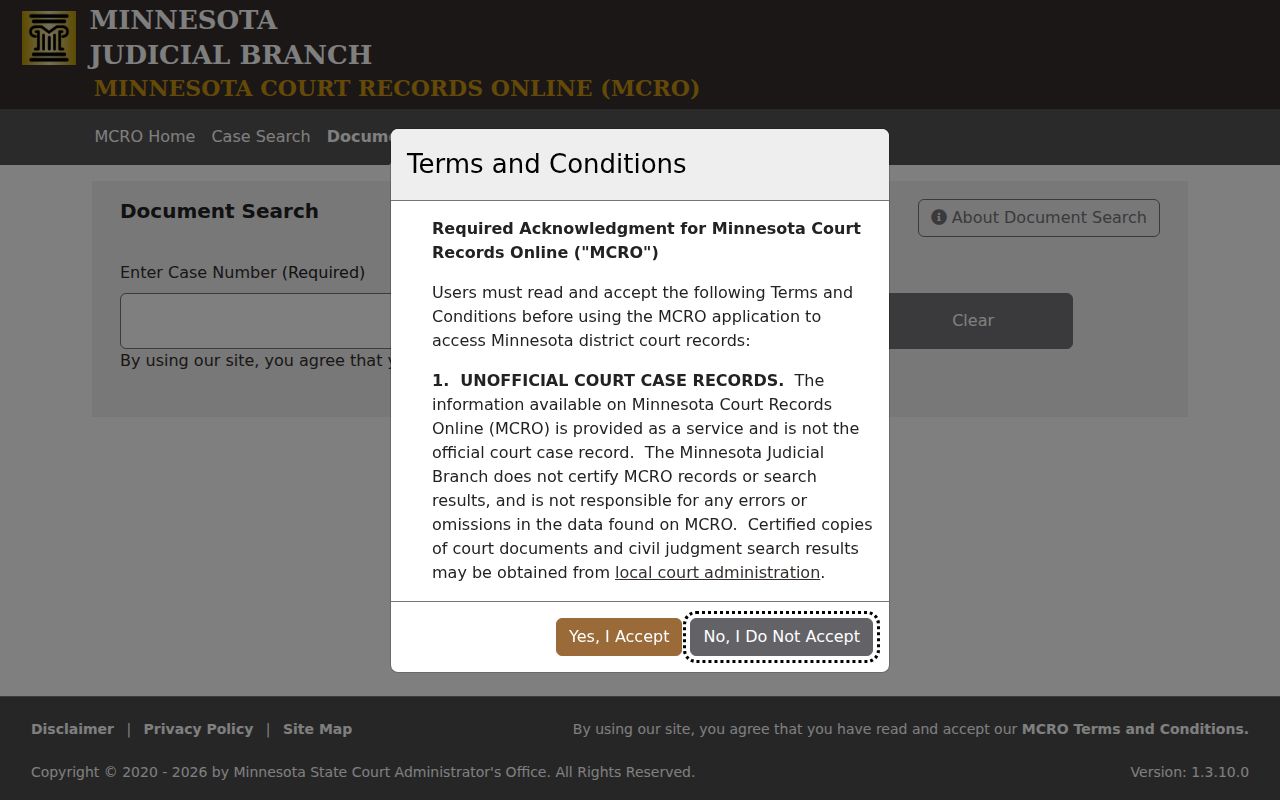
Document Search works differently. It needs the complete case number and returns the public documents tied to that one court file, not a general name search.
Wright County Civil MCRO Fields
MCRO offers Wright County civil searches three modes: name, case number, and attorney. The name mode covers people and businesses alike. Per the official directions, you can run an exact search, place a wildcard after two characters, or choose Sounds Like to catch spelling variants. Just never combine the wildcard with Sounds Like. Filters for date filed, status, case category, and Wright location are optional. Add them after entering your strongest identifier.
| Field | Type | Wright civil use |
|---|---|---|
| Name, Case Number, Attorney | Tabs | Choose one primary search mode |
| Last, first, middle | Text | Use person or business naming as applicable |
| Date filed | Exact or range | Optional MM/DD/YYYY filter |
| Case category | Checkboxes | Select Civil when narrowing |
| Case status | Select | Use the current MCRO selector |
| Court locations | County control | Choose Wright County for local files |
| Find and Clear | Actions | Run or reset the selected query |
Wright County case numbers typically pair the county prefix with a type code. One civil shape is 86-CV-24-####. For the true type and venue, check the Case Information block.
What a Civil Docket Shows
The Register of Actions is a record of court activity. It is not a scoreboard. Case Information names the file, title, civil type, and filing date. It also lists Wright venue, judicial officer, status, flags, and any related cases. Party Information lists the roles. Plaintiff, defendant, petitioner, respondent, or intervenor may appear, along with attorney details where available. The caption alone proves no liability and no final result.
| Case information | Number, title, civil type, filing date, court location, judge, status, flags, and related cases. |
|---|---|
| Parties and attorneys | Each public party role and available representation detail. |
| Case events | Complaint or petition, service, answer, counterclaim, motions, notices, orders, and later activity. |
| Hearings | Motion, scheduling, settlement, trial, referee, or conciliation settings with current or past status. |
| Disposition | Judgment, dismissal, settlement, default, nonsuit, or another recorded result. |
| Judgment details | Monetary judgment parties, details, and recorded satisfactions. |
| Documents | Public pleadings, orders, judgments, and notices where remote access is allowed. |
Wright County Civil Event Trail
Most Wright County civil cases open with a complaint or petition. Service follows. Then comes an answer or other response. Motions and orders come next, and eventually a final or partial outcome. A motion entry is a request, not a ruling. To know what the court decided, read the filed motion, the hearing notice, and the signed order where public. After judgment, watch for satisfaction, a writ, garnishment, a correction, or an appeal. Entries run reverse chronological. Find the newest one first and work backward.
Service and an answer deserve special attention. They mark when a party entered the case. They also signal whether a default judgment or other disposition might follow later. Treat a settlement, dismissal, or judgment as real only when the order or judgment document says so. Never rely on a status label alone.
Types of Civil Cases on the Docket
Wright County runs one District Court level. It holds major civil cases alongside family, probate, juvenile, traffic, and conciliation divisions. When running a civil docket search, trust the case type shown in Case Information over guesses based on a city, a sheriff, or a filing location. Conciliation Court handles claims of generally $20,000 or less. If a conciliation case is appealed, it becomes a District Court case. It then has its own District Court record trail.
| Wright case area | Where it sits | Search point |
|---|---|---|
| Major civil | Wright County District Court | MCRO Civil category and case number |
| Conciliation | District Court division | MCRO plus the conciliation record |
| Family | District Court division | Case information may be public while document access is narrower |
| Probate | Probate and Mental Health division | Public records remain subject to access rules |
Settings and Hearings on Civil Dockets
Civil hearings in Wright County take several forms. They include motion, scheduling or status, settlement, trial, referee, and conciliation settings. The MCRO Hearings block gives case-specific dates. The Wright Weekly Public Court Calendar adds daily public context when a setting appears. Courtroom and judicial assignments shift. Before trusting an older date, compare the hearing notice, the newest Case Event, MCRO Hearings, and the current calendar.
Anyone resolving a Wright County civil matter should keep the case number, the newest notice or order, and the public event name at hand. With those, a counter, telephone, or mail request stays precise. It works even when an online document is missing.
Wright County Civil Judgment Satisfactions
Money judgments get their own search route. MCRO Judgment Search lets you query by debtor name, docketed date, judgment status, and location. The Register of Actions still holds the fuller event history. Judgment Details narrows to docketed awards, parties, and satisfactions. A satisfaction shows the judgment was paid or otherwise resolved. It does not wipe away the earlier case events.
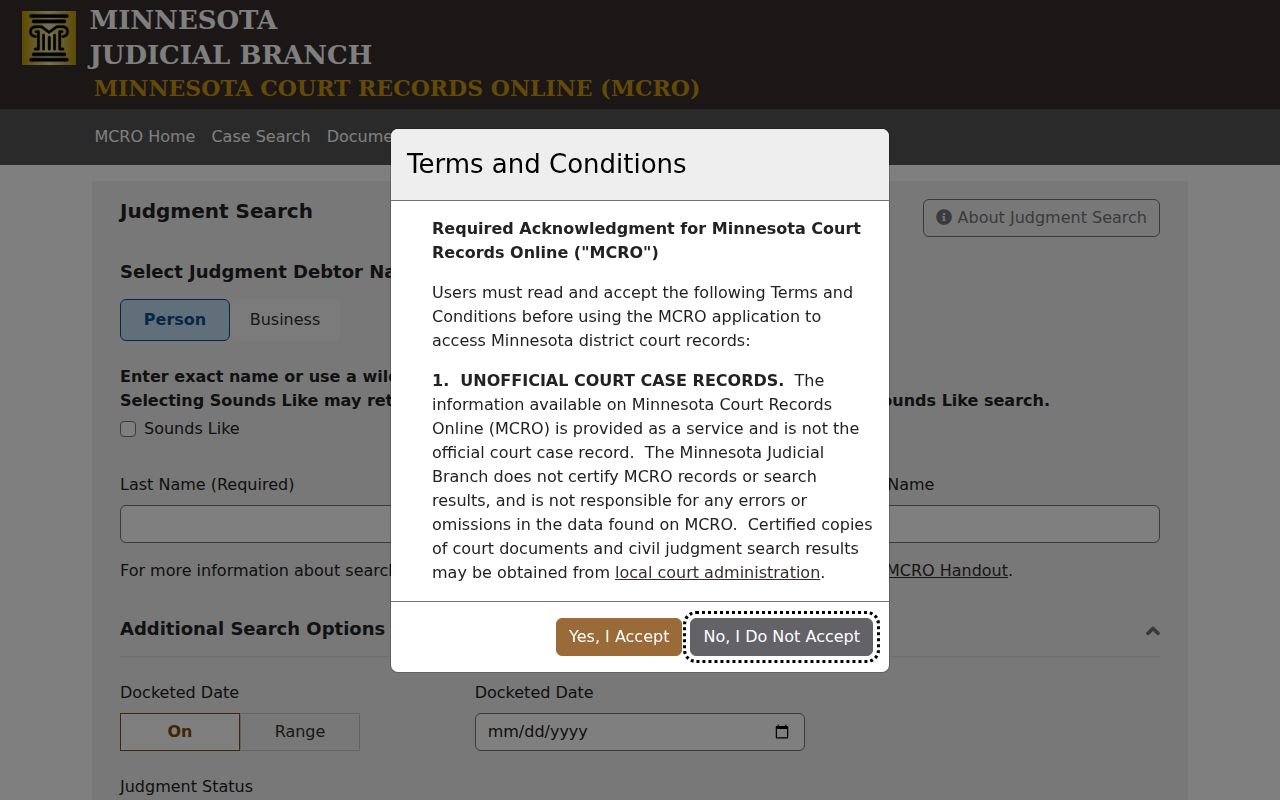
That form is handy when the question is specifically a docketed money judgment. Still, read it beside the Wright County civil case record for the whole story.
Public Access to Civil Dockets
Wright County opens its civil docket in stages. First comes MCRO, the remote option. The MPA Courthouse terminal, inside the courthouse, offers a broader public electronic view. Court Administration then handles the counter, the telephone, and the mail for a specific record or a certified copy.
MCRO does not certify its results. The Minnesota Rules of Public Access govern what the public may see, and Minnesota Statutes section 13.03 supplies background on county administrative data without overriding the court-specific access rules. For remote viewing, the Minnesota Court Records Online access information page states which case records the courts make available online and where the limits fall. Certification is a clerk's job.
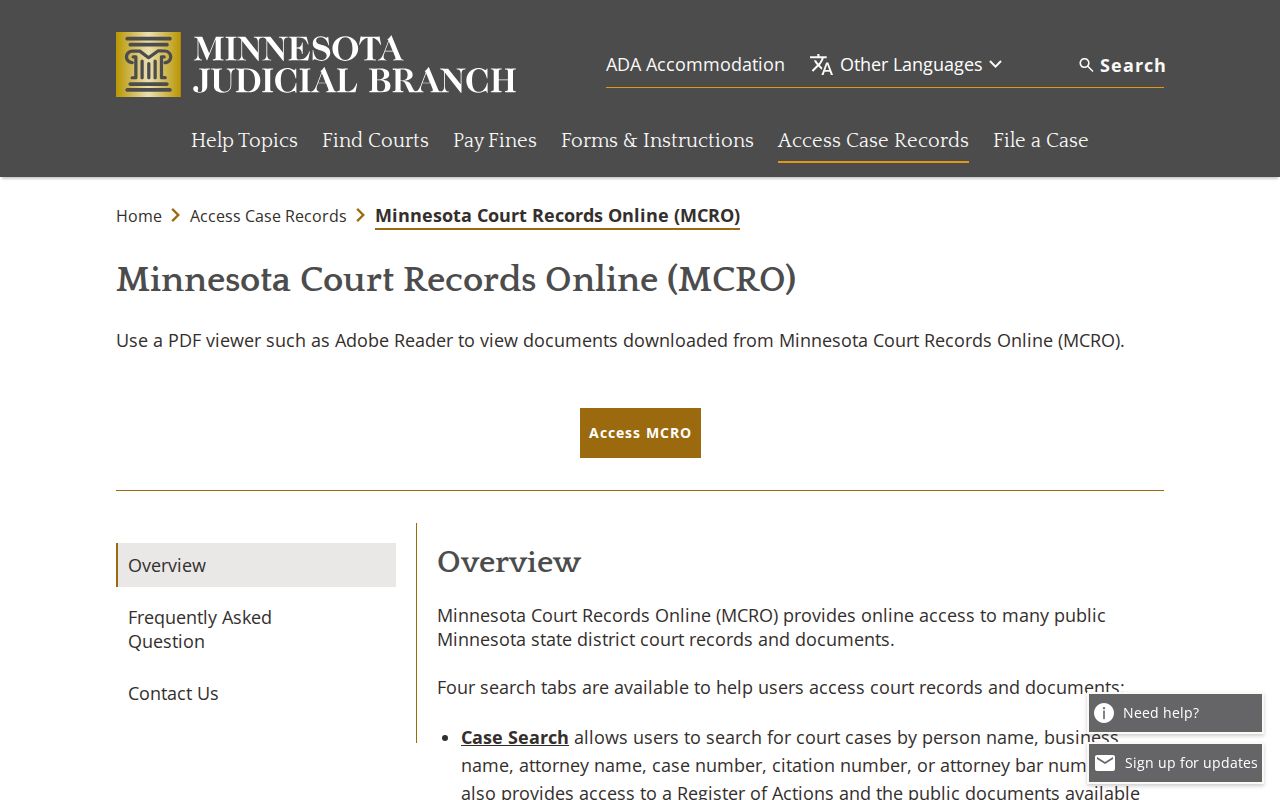
The overview walks through four separate searches. Case, Document, Hearing, and Judgment each do a different job, and it explains why an available public record can still face remote-access limits.
Access rules:
Minn. R. Pub. Access 4 governs general case-record accessibility subject to restrictions and orders.
Minn. R. Pub. Access 8 separates courthouse inspection from remote access.
Minn. Stat. section 13.03 addresses public county government data, not a replacement for the judicial-access rules.
Wright County Civil Older File Requests
A civil document outside MCRO takes one more step in Wright County. Start with the exact case number. Name the document too. The free public terminal may show a public item that remote access omits, and Court Administration inspects records and takes copy requests at the Wright County Justice Center. Plain copies carry no fee under the statewide copy guidance. Certified copies generally cost $14 per document, and exemplified charges run higher. Transcripts are a court reporter's job, not Court Administration's.
Call (763) 760-6300 for a telephone request. Mail works too. Send it to Wright County Court Administration, 3700 Braddock Ave, Room 1100, Buffalo, MN 55313. Include the case name, the file number if known, the identified document, your return address, a daytime telephone number, and payment for the certified copy. Allow about five days by mail. That is the local instruction.
Wright County Civil Records Route
Pick the right search. MCRO fits an initial Wright County civil search. Document Search pulls a known case file. Judgment Search finds a docketed monetary award. Hearing Search lists scheduled court events. eFile and eServe is the filing system for registered users. It is not the ordinary public Register of Actions.
Some cases lead beyond the District Court. When one does, the related entry may identify a route to the Minnesota Court of Appeals. A public case result can help you find the file. Only a clerk-issued certified copy serves as the court's verified copy, though. That is the one to trust for a particular Wright County document.
The Minnesota Statutes section 13.03 page publishes the official text of the state's government-data law.
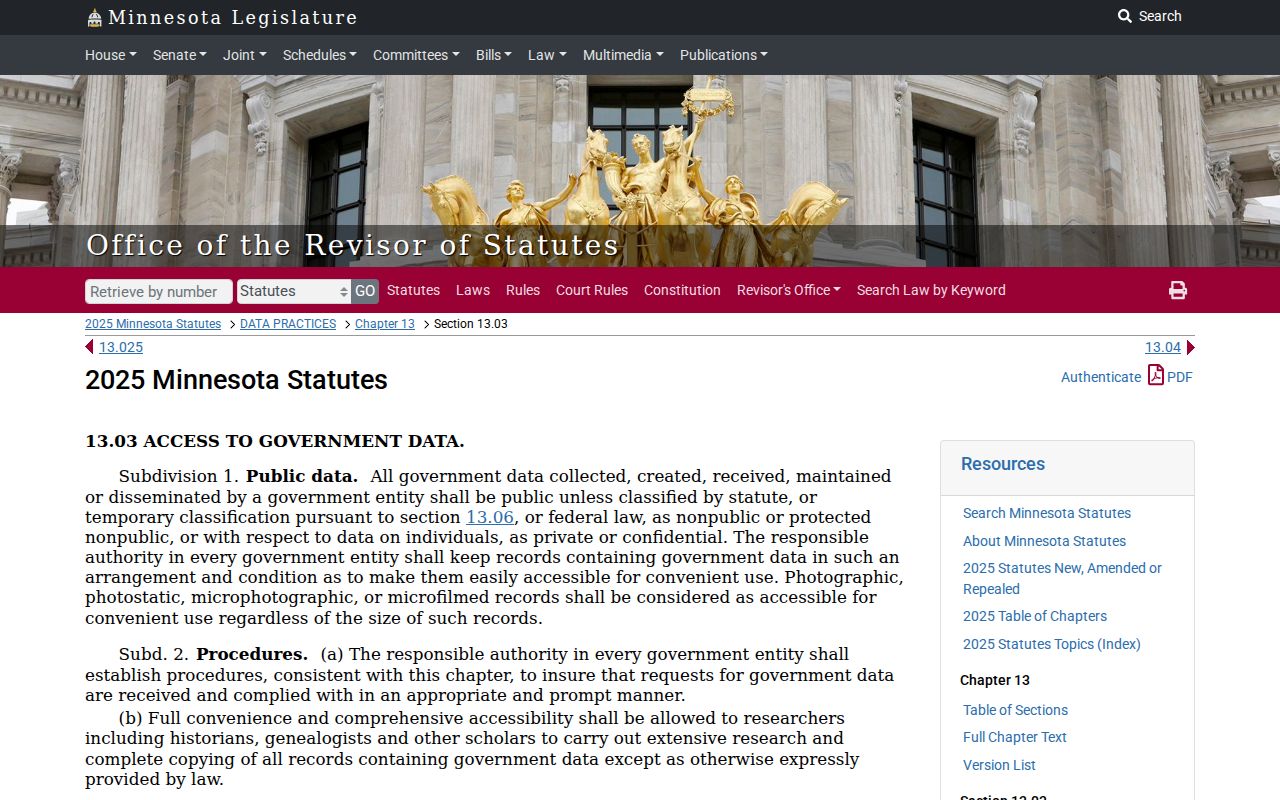
Its role stays limited here. The statute covers county administrative data background, while the Minnesota judicial-access rules decide what Wright County court records the public can reach.